


Error in Reductivism
A grievous error in modern medicine is the belief that we can understand an infinitely complex human by focusing on the microscopic. The genes, the proteins, the mutations.
Reductivism at its finest.
Of course, for academic and scientific purposes this has its benefits. But for understanding and improving the wellbeing of a human, its got tremendous limitations.
The human genome contains roughly 20,000 protein-coding genes. Through multiple layers of molecularly wizardry, these genes are estimated to produce up to (and over) a million different proteins (depending on who you ask).
No doctor, nor patient, is going to be able to juggle all that information. No practical advice can be meaningfully derived from this gargantuan network of genes and proteins.
Human beings are simply incomprehensible at this resolution.
Not Just Medicine
Several fields of science run into this problem: the raw data is real, but it is useless at the same time. And every field that has actually solved this problem has solved it the same way. Not by ignoring the granular reality, but by finding the right layer of comprehension.
Even in physics this is necessary.
Start with a single molecule of air in the room around you. It has a position and velocity that will change in the next instant when it collides with its neighbor. There are roughly 10,000,000,000,000,000,000,000,000 such molecules in this room, each one moving along its own path.
There exists no instrument nor computer that could track them individually.
And yet you know the temperature of this room. You knew it the moment you walked in, without needing to know anything about a single molecule.
Temperature is not a lie told to hide the complexity underneath it. It is the correct level of description. It is what you get when you take an incomprehensible swarm of particles and ask “what is this swarm doing as a whole?”
The molecules are still there, still colliding. But, we are wise enough to describe the swarm without describing the particles.
Climate science makes the same move on a different level. A single location on Earth has a temperature reading for every hour of every day, a rainfall measurement for every storm, and a humidity curve. But, nobody understands climates this way.
Instead we say: this is a tropical climate, this is arid, this is temperate.
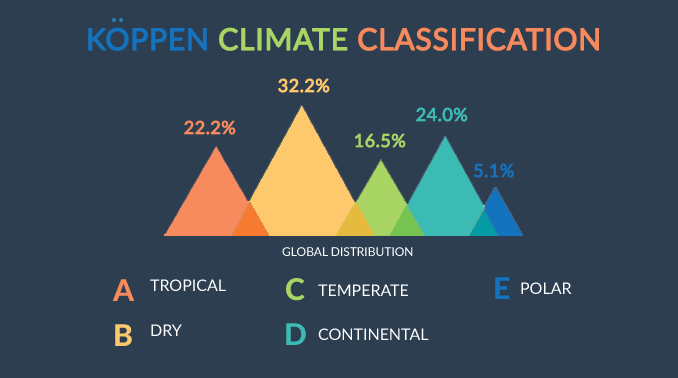
The Köppen system takes years of granular meteorological data and compresses it into a handful of categories. Once you know which category a place belongs to, you know something real and actionable about it. What grows there. What to build. What to wear. The category doesn’t diminish the variation within it; it makes this data usable.
How Psychology Solved the Problem
Personality psychology ran an analogous procedure on the human mind. The lexical hypothesis behind the Big Five Traits started from thousands of trait-words that language has generated to describe people (stubborn, warm, anxious, curious, meticulous), and looked for overlap. Factor analysis collapsed the language cloud down to five principle axes. Not because people are simple. But because the space of human variation, however vast it looks at a granular scale, has a comprehensible structure to it.
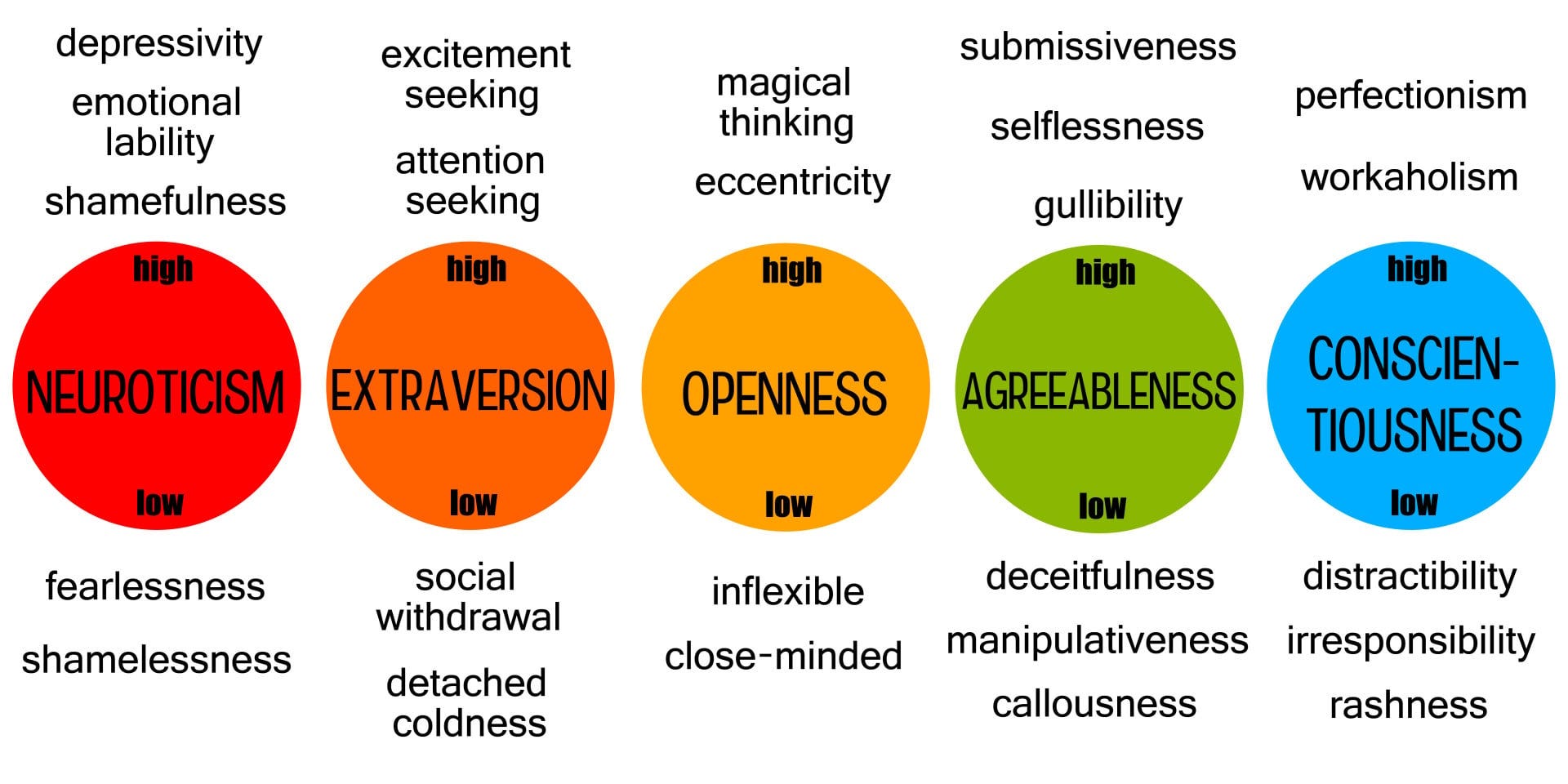
Notice what’s happened across these three domains: particle to temperature, weather to climate, word-cloud to trait-axes.
In each case, a highly specific and individually irreducible observation gets compressed into a smaller set of categories that are comprehensible and therefore useful.
How medicine solved it 2000 years ago
This process also applies to biology and metabolism.
There are hundreds of thousands of proteins in the human body by conservative estimates. Tens of thousands of genes governing their expression. And an incomprehensible number of interacting pathways that govern the functions of our body:
determining how you turn food into heat,
how you store fat,
how you respond to cold,
how quickly you tire.
Trying to understand a person by an inventory of their proteome one molecule at a time is as hopeless as trying to understand a room by tracking one air molecule at a time. And yet, a swarm of metabolic processes has a character.
A tendency toward heat or cold, dryness or moisture, quickness or sluggishness. Furthermore, these tendencies are consistent enough across human beings that they can be named and be acted upon with sufficient accuracy.
This is what temperament (what I call metabolic personality) claims to be. It’s not some woo-woo impression of biology, but the metabolic equivalent of what temperature is to particles and what the Big Five traits are to behavior.
Why Temperaments Exist.
Temperaments are a cluster. A usable unit of information sitting above the chaos.
To continue on our personality analogy, two fundamental questions arise when we discuss personality.
Where does personality come from, and why does it exist at all?
Where it comes from is still unknown. Genes contribute. Developmental environment contributes. Geolocation contributes. Even the cosmological time-point which governs the spirit that may embody your body at the time of conception. This may sound crazy to some of you, as it did to me many years ago…but the parallels are uncanny.
Why personality exists is a more answerable question, and the answer matters.
If one personality type were simply the best one, evolution should have eliminated the others long ago. The fact that boldness and caution, sociability and solitude, all persist stably across generations means none of them wins outright. Each comes with a trade-off. The bold, exploratory animal eats more, mates more, and dies younger. The cautious one reproduces less, and lives longer. Which strategy pays off depends on the environment. Predation pressure, population density, resource scarcity. There is no personality that is best for all circumstances.
Reminder: Paid subscriber Live Q&A will be on August 29th at 10AM CST.
FYI: Q&As occur on the last Sunday of every month.
Metabolic Personality.
And here is where metabolism and personality turn out to be entangled.
Behavioral ecologists have found that an animal’s personality and its metabolic rate are related: the bold, fast-exploring individual tends to run a faster metabolism, grow quicker, reproduce earlier, and die sooner. In broad terms, this is the choleric individual.
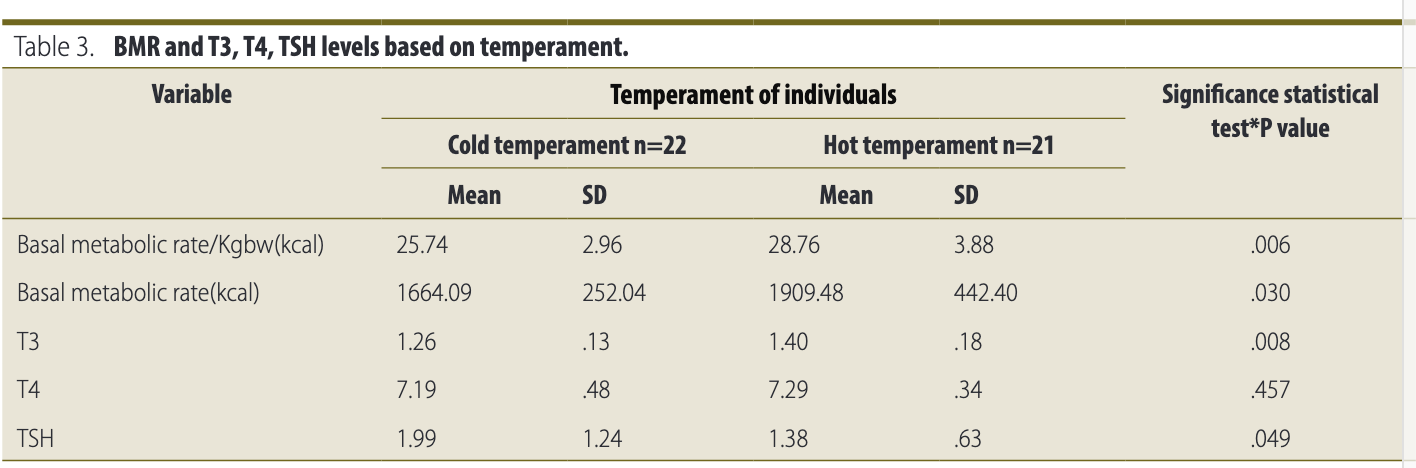
The cautious, slow individual runs cooler, grows slower, and lives longer. Personality and metabolic temperament are not two separate systems that happen to resemble each other. In many organisms they appear to be two expressions of the same underlying adaptation strategy.
Which means the question “why does personality exist” and the question “why does temperament exist” are the same question. These are the same question, asked along two different dimensions of the organism.
And the answer looks like this: because temperaments are adaptation strategies across a landscape of variable existence. Different circumstances, origins, and goals of existence require different adaptation strategies - each of which come with their own trade-offs.
And if you want to address the source question (where personality comes from), these different temperaments are appropriately suited for the arc of the spirit that embodies the human. From the spiritual perspective, the human is a vessel for the journey of the spirit that enlivens it. From the moment of conception, the point in which the spirit imbues itself into the human, the temperament and purpose of the spirit impacts the physiologic and psychologic temperament which develops in the human.
The Variations in Temperament
Classically and psychologically, temperament is divided into the main four: Sanguine, Choleric, Phlegmatic and Melancholic. But, as you can see from the graph below, there are different degrees for each axis. It isn’t the case that everyone maps cleanly onto Sanguine or Phlegmatic alone. You can think of each person as a dot somewhere along the cartesian map below. And, the position of this dot determines your sanguine-ness or melancholic-ness.
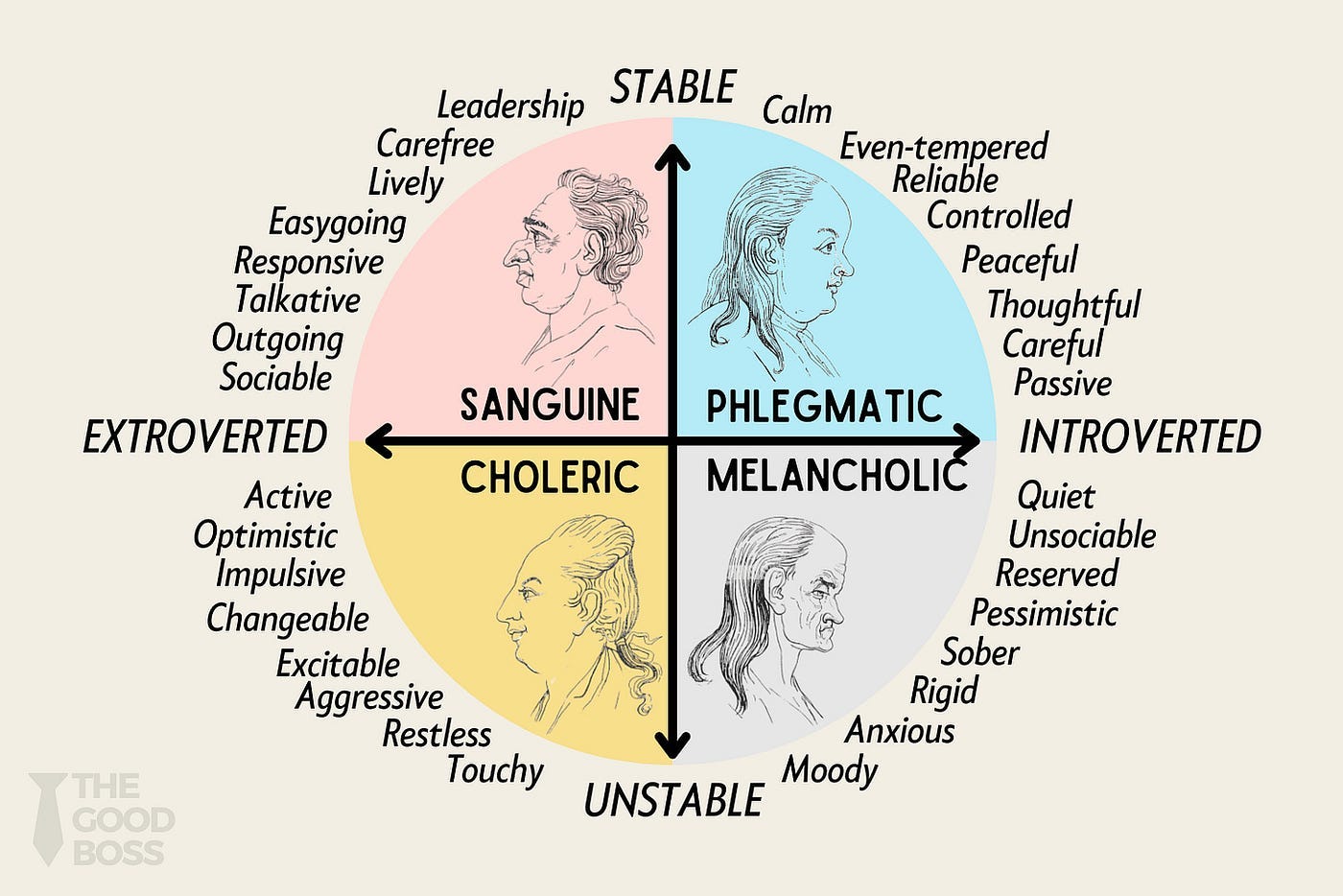
The same is true with metabolism. In fact, Avicenna and the Galenic tradition describe that pure temperaments (e.g. Sanguine) are quite rare, and that most people have a compound temperament; e.g. Sanguine-phlegmatic.
Unfortunately, the practice of identifying and applying the insights of temperament have been lost to time. I have seen some new practitioners who are applying this lost art to psychology (i.e. BioType) and helping people evolve spiritually. But, for the purpose of understanding and optimizing metabolic health…there remains a huge gap.
In fact, unless you are able to find a Unani physician in your local area…you’re probably out of luck. The available temperament quizzes leave a lot to be desired. Almost all of them suffer from the same problems:
Only categorize into 1 of 4 temperaments
The language they use is archaic or difficult to understand
The inventory of question is insufficient to assess compound-temperament
and more…
This is why I’ve spent the last year developing a temperament self-assessment that works for the vast majority of people. Of course, there will be rare temperamental combinations that will require deeper personal work with a trained Unani physician. But by my calculations…about 98% of the population will be captured by this assessment.
Subscribers know that we ran a pilot test of the quiz over a year ago, with good results. But, there was a lot to improve.
Version 2 of the self-assessment
The good news is that I’ve finished constructing the questions and answers, as well as the scoring logic which will determine the temperament report. But I still have to figure out how to code that scoring logic into an assessment that anyone can take online.
Let me know what you think about temperament, the quiz, and how it can inform your daily life. To find out when the quiz is released, subscribe below!


very insightful, got me thinking in a new direction, enjoyable and useful, makes it fun to be alive, just saying.
This article is thought-provoking and mind-blowing. I'm itching to take the final assessment!