



Background
In our modern industrialized world, thyroid dysfunction is one of the most common health problems. Far more than “data” suggests.
Data can only reflect people who have been diagnosed with thyroid dysfunction. What about people who are not diagnosed? What about people who cannot be diagnosed by standard testing.
What do I mean?
Let’s take low thyroid function (hypothyroidism) as an example. The vast majority of diagnosed hypothyroidism is clinched with a panel of tests looking at various thyroid related molecules, primarily Thyroid-stimulating hormone (TSH) and Free T4 (a thyroid hormone).
Thyroid Panel Normal Range
TSH: 0.4 - 4.5 mIU/L
Free T4: 0.8 - 1.8 ng/dL
In reality, these tests can be useful for overt cases of hypothyroidism.
Then, there is subclinical hypothyroidism. Which is diagnosed with a High TSH but normal Free T4.
Now, what about people with one or a few symptoms of hypothyroidism, but normal lab results? This would require the work of an astute physician who truly understands thyroid function.
But, let’s say you’ve accurately diagnosed low thyroid function.
In the person with abnormal lab tests, the treatment approach seems straightforward…right?
Treatment will be guided by normalizing lab tests. Often, TSH is what is used to guide treatment.
But, what value should you target? A TSH closer to 0.4? 4.5? Right down the middle?
To add more complexity to the situation, what do you target if your lab test are normal?
Understanding the Thyroid Gland
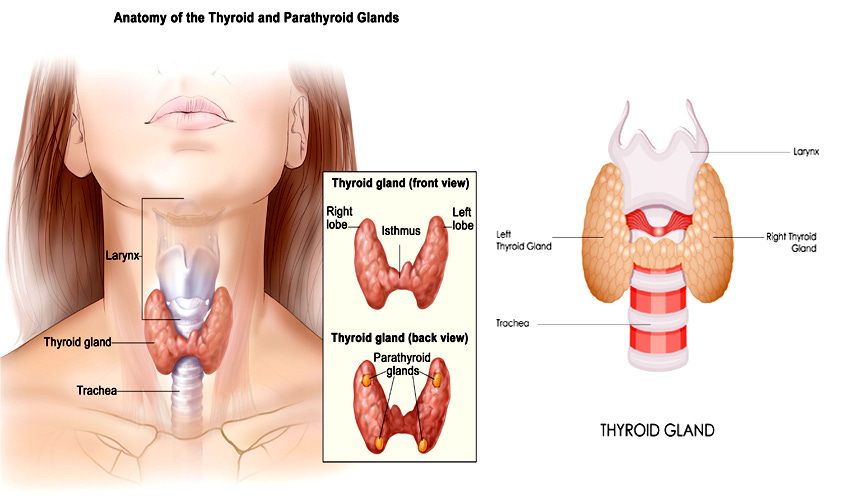
The standard education states that the thyroid is a hormone-secreting gland in the neck, whose function is to regulate the body’s metabolic rate, heart rate, temperature, and overall energy levels.
To carry out its role, the thyroid needs many things not limited to:
Tyrosine (amino acid)
Iodine
Selenium
Zinc
Sunlight
That last one is really important.
This article is not about specific treatment of low thyroid function. This article is about temperament and its relationship to both thyroid function as well as using it as a guide for thyroid treatment.
Granted, there are other ways to guide treatment of hypothyroidism. Chief amongst them will be alleviation of symptoms, and a normal heart rate and body temperature.
Infamous endocrinologist and thyroid specialist Broda Barnes makes a strong case for using heart rate and body temperature as a way to guide treatment. They do not recommend using lab tests. The reasons are plentiful. First, these lab tests do not reflect what we believe.
Second, there is no “correct” lab value…since there is a broad range. Ranges of data are great for population analysis, but we are talking about treating a particular person.
Of course, you can get quite far using Barnes’ recommendation - using heart rate and body temperature.
But, this approach misses an important distinction.
If your particular temperament is cold (or hot)…what do you do?
What do I mean by this?
Let’s dig in.
Temperament and the Thyroid
In Unani medicine, temperament is fundamental quality of all things. Including a person, their organs, and even the food they eat.
Temperament is a dynamic balance of two fundamental qualities of all things: heat and moisture. That is, things can tend towards being hot (or cold) and wet (or dry). It gets a bit more complicated than that, with degrees and divisions of various qualities But, this is the basic concept.

As you may have intuited, the thyroid is temperamentally hot. This is its balanced temperament. Similarly, when thyroid function gets weaker, the gland is said to be deranged towards a cold dystemperament.
These are both corroborated by our modern understanding of thyroid, as one that increases energy output, and literal body temperature when functioning normally…and getting colder when its function goes down.
This is why thyroid function is the perfect vehicle by which to understand the importance and role of temperament.
Hypothyroidism is described to be a cold dystemperament. A phlegmatic temperament is one that is cold and moist. Which tracks perfectly with common clinical features of hypothyroidism:
cold intolerance
Weight gain
sluggishness
Swelling/edema
excess phlegm
Now, we need to explore the most important consequence of this understanding of thyroid function.
If a person has a cold (or hot) temperament at their normal baseline…how does this guide treatment of thyroid function?
If you don’t want to rely on ancient top-down understanding of physiology…there are some modern studies which shed light on this interaction, and ultimately can guide treatment.
