



A couple of months ago, a friend of mine reached out about pain he’s had in his neck for several years. The pain was centered in the back, with radiating symptoms along his shoulders and arms.
For years this had only worsened…relieved intermittently by pain medication. He had tried physiotherapy, gone to several doctors including spine surgeons.
They had done all usual imaging: x-rays, CAT scans, MRI.
The conclusion from the doctors was unanimous: there were disc herniations in his neck (cervical spine), and the problem would keep getting worse…until eventually he would need spinal fusion surgery.
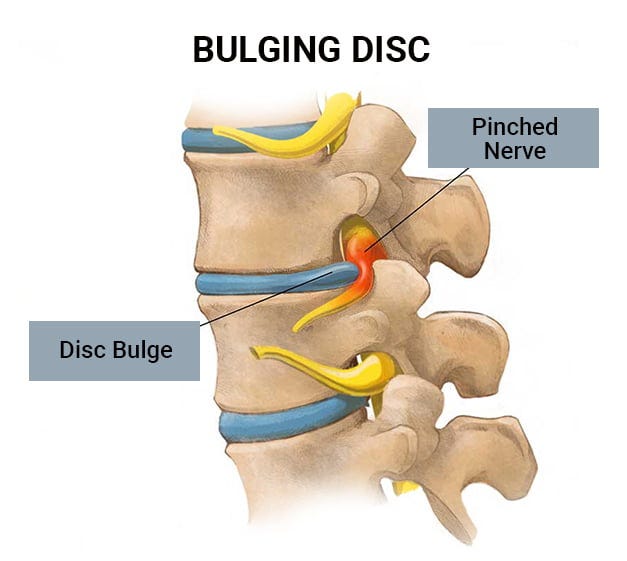
This is an incredibly common problem, especially in the modern, sedentary, and tech-heavy world. I could write up a long list of all of the factors contributing to neck pain, herniated discs, and tech neck. But words alone would pale in comparison to understanding and visualizing the mechanics of our spine…and ultimately the axis of our being.
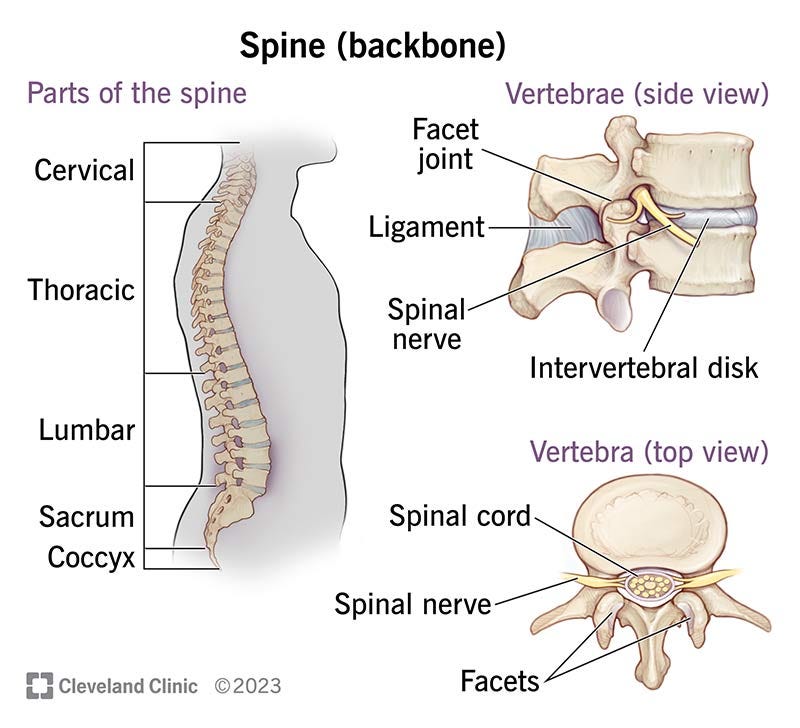
The first thing you want to appreciate is that between every bone in the spine (vertebra) there are several joints. The disc between the vertebra are just one of these joints. There are also facet joints, which are smaller joints along the back of the vertebra. And, in the neck there are also uncovertebral joints, which are smaller specialized joints aimed at stabilizing the neck while facilitating flexion and extension (forward and backward bending of the head/neck).
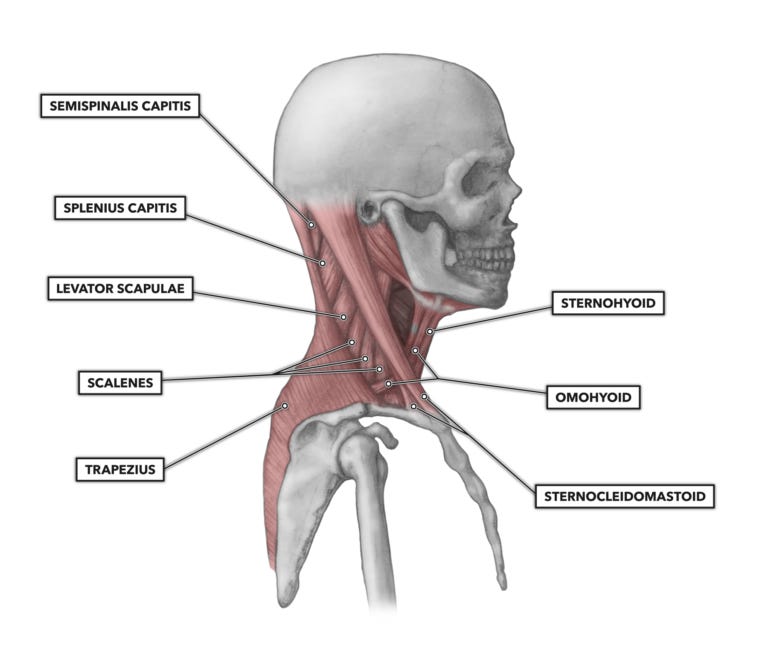
Just like your hip or your knee, these spinal joints have ligaments and muscles which stabilize the balance of the joint and facilitate movement. Without these, your neck would just flop down forward, or backward, and even a little to the side.
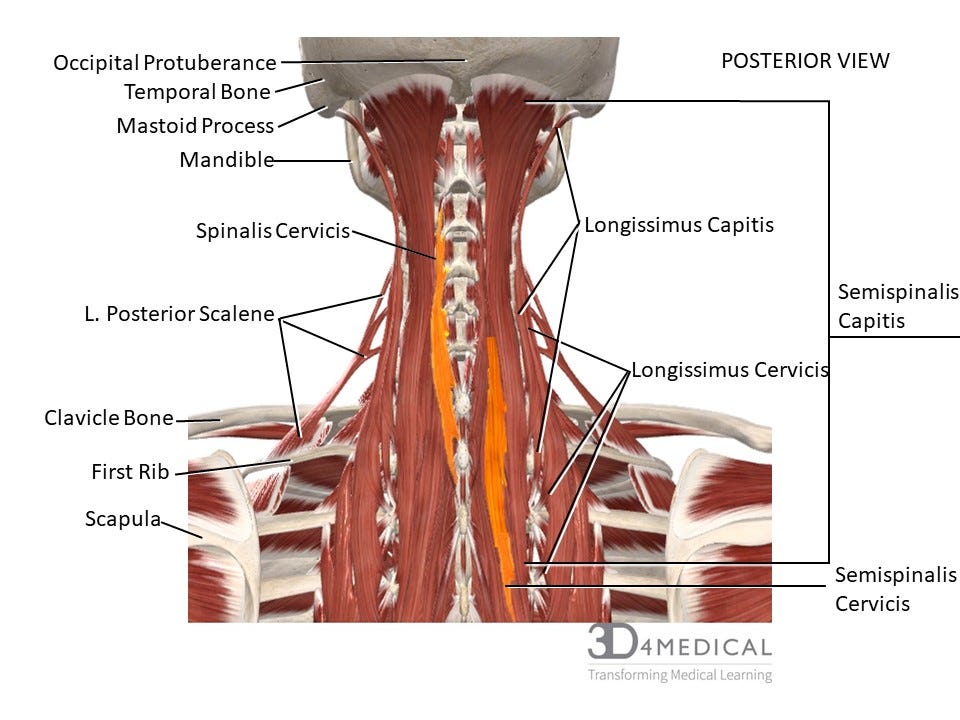
Now, it’s important to keep in mind that each spinal level in the neck has 3-4 joints. Which means there isn’t just one joint that we have to concern ourselves with.
In the neck alone, the balance of tension and relaxation between the front, back and side muscles are responsible for the stability of over 20 joints simultaneously!
The stability and harmony across all these joints is what leads to the postural curvature of the spine. Furthermore, the joints and muscles of the neck are stabilizing a hefty head (>10 pounds).
Which means that even the slightest imbalance in muscle tone (and therefore neck posture) will lead to chronic aggravation of at least one spinal joint. But here’s the kicker. Because these joints exist in sequential chain across the entirety of the spine, a small imbalance at one joint can have consequences on the entire spinal axis.
From this picture, you can start to visualize all of the factors which can impact the health of your neck:
Work conditions
Exercise regimen
Stretching
Even the direction that your eyes are looking for extended periods of time
For instance, if your computer or phone screen is below eye level…you head and neck will start to drift and compensate for this
Now, the common theme across the conditions of daily modern life is that it is heavily biased towards flexion. That is, head forward/down orientation.
If you stop and think about this…when was the last time you habitually and consistently favored neck extension/head backward movements?
Across time this leads to tightening and shortening of flexor muscles, and laxity/atrophy of extensor muscles. Further aggravating the muscle tone and joint imbalance.
Which is exactly what I saw in my friend’s neck…and see in the vast majority of back pain cases I am consulted on.
To further complicate matters…it isn’t just the force of gravity acting down upon our spine which can lead to spinal imbalance. But, the complementary force upward from walking.
The shape that our foot conforms to as a result of the intricate balance of the tiny joints within it. This impacts how we walk and the force transmitted upwards.
But, this is a topic for another day.
Back to Basics
When I looked at my friend’s neck MRI, there were many things which were clear to me…that were not mentioned in the report from the radiologist.
As you can see from the sample image blow, human anatomy is incredibly complex.
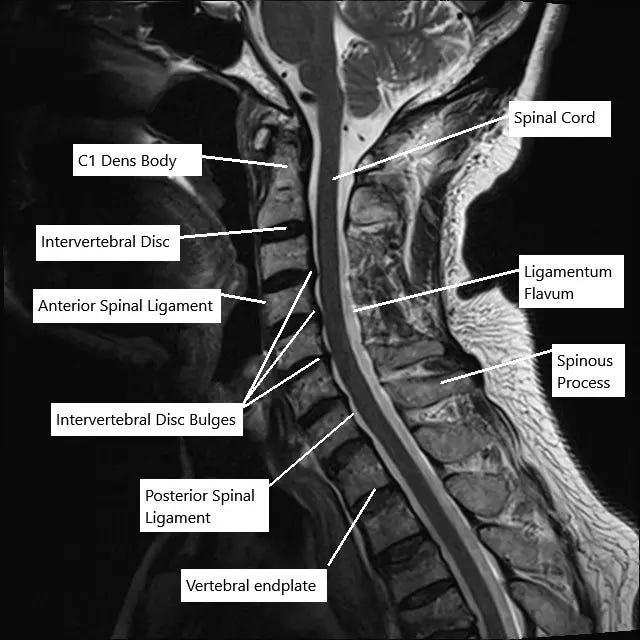
You may think that when a radiologist looks at something like this, they would discuss every abnormality…and have an idea of why it is abnormal. But, this is far from the truth.
Reading a spine MRI has become incredibly systematized and cookie-cutter. In fact, most radiology practices incorporate reporting templates, which they use during interpretation…and simply fill in the blanks.
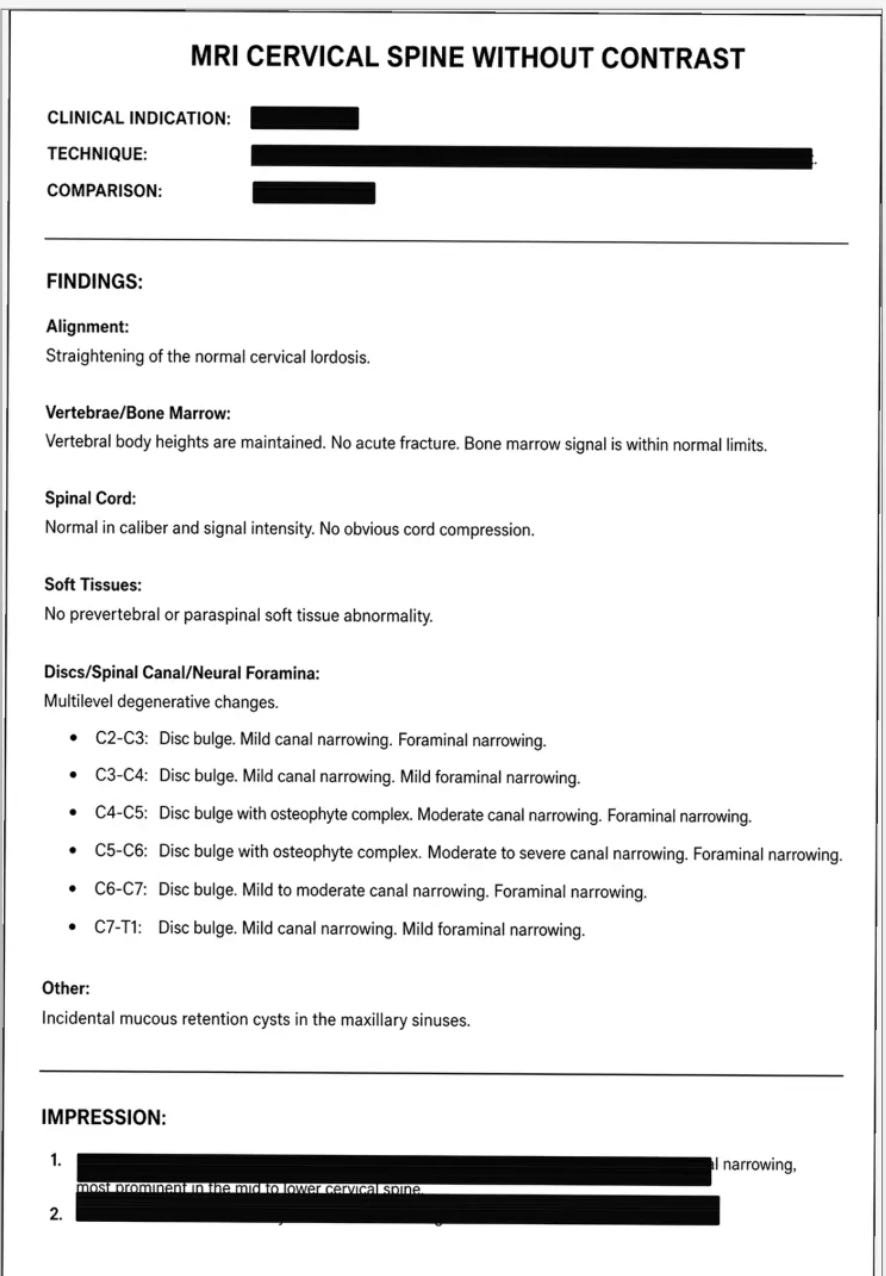
I’m sure many of you have seen a report like this, and it’s not all that different for other parts of the spine. To be honest, structured reporting improves efficiency for the radiologist…but as far as the patient is concerned…it leaves a lot to be desired.
I digress.
You can see that the vast complexity of everything we just discussed is not described in a standard report.
Why am I bringing all this up?
Imagine you are engaging with life in a manner that is leading to imbalance in your core axis (the spine). This engagement is leading to various forms of stress:
Inflammation
Joint imbalance
Dehydration (yes, joints and discs can dehydrate)
Posture
Then, you develop some pain and discomfort.
So you go to the doctor. They order some imaging and they all conclude that the problem is that you have a disc herniation.
Think of this disc herniation as the outcome or physical manifestation/symptom of the deeper problem. But, none of the doctors see past these manifestations.
They simply target their therapy to the “symptom.”
This is what happened to my friend.
Even worse then that, they led him to believe that this is inevitably going to get worse…until one day he’d need surgery.
Before we dig into how we fixed his neck, I want to provide you with some snippets of his experience along the way.
The first time I checked in on his progress he said:
Hey! It’s feeling better than it ever has.
One month after, he said:
I haven’t felt this good in a long time…
At the end, I asked him a question that deep down I knew the answer to. But, I wanted to get his perspective on it.
Before that, let’s dig into how we fixed his neck…
